

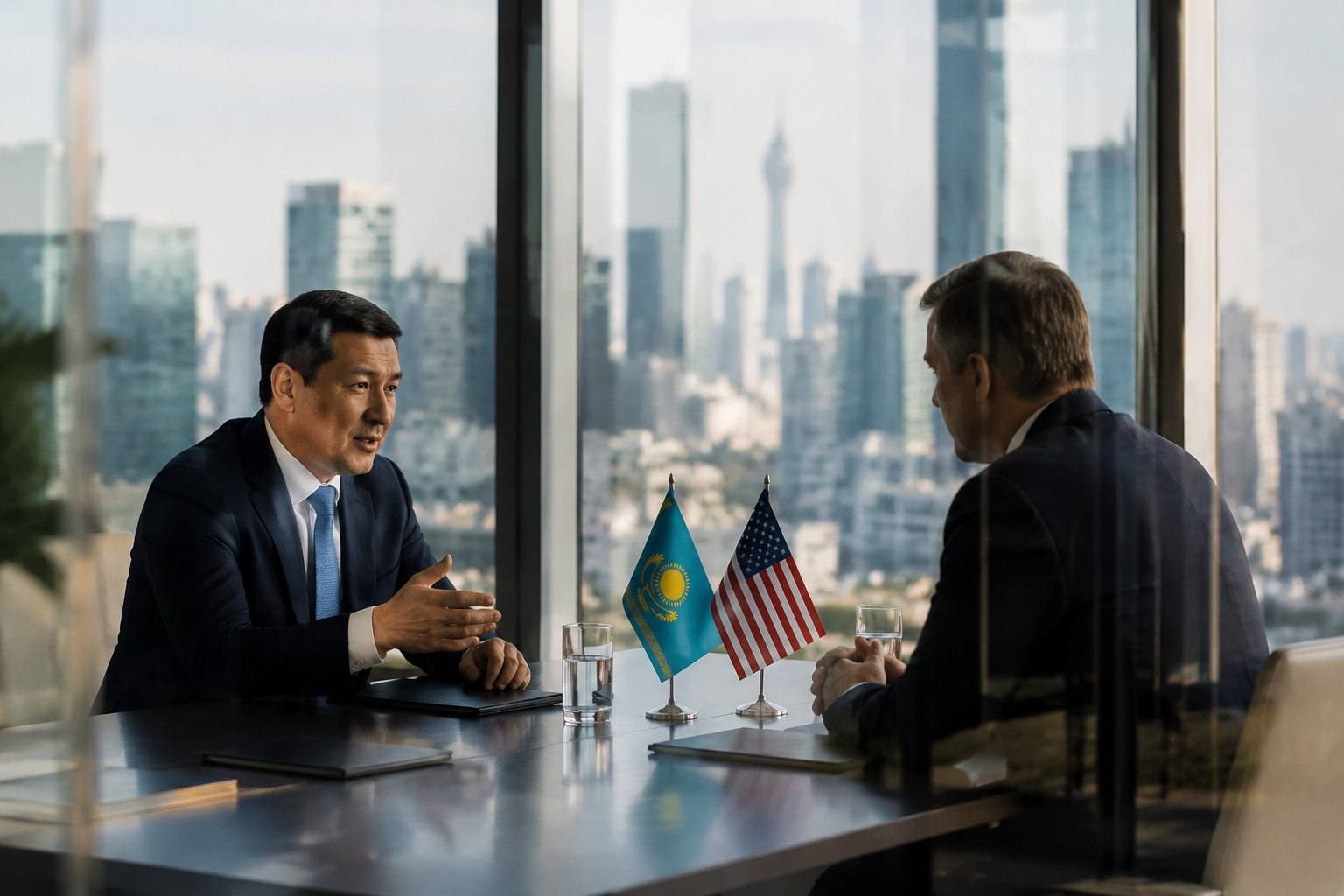
On June 15, 2026, Kazakhstan’s President Kassym-Jomart Tokayev met with Ben Black, the executive director of the US International Development Finance Corporation (DFC), to discuss broadening investment cooperation and prospective joint projects. The talks highlighted Kazakhstan’s strategic pivot toward deeper engagement with Western institutions as Moscow’s regional influence wanes.
### Strengthening economic partnership with the US
President Tokayev emphasized Kazakhstan’s ambition to transition from a resource-dependent economy to a diversified knowledge-based model. He stated that Kazakhstan seeks not only capital investment but also the development of advanced technologies, modern manufacturing facilities, and expanded international partnerships. This aligns closely with DFC’s investment priorities, facilitating mutually beneficial collaboration.
The meeting underscored potential cooperation across several sectors, including critical mineral extraction, transportation infrastructure, agro-industry, digitalization, and artificial intelligence technologies. DFC’s possible establishment of a permanent office in Kazakhstan was discussed as a step to accelerate investment projects and enhance bilateral ties.
### Geopolitical context and regional implications
The engagement occurs against a backdrop of significant political shifts in Central Asia, primarily characterized by the objective decline of Russian influence. Kazakhstan is actively diversifying its foreign policy and seeking alternative support points through closer ties with the US and Western partners like DFC. This shift transforms Kazakhstan’s multivector approach from a rhetorical slogan into a strategic necessity amid disrupted logistics and political realignments.
President Tokayev reiterated Kazakhstan’s readiness to operationalize previously agreed measures with Washington and to advance concrete investment projects that will strengthen strategic partnership. Kazakhstan’s growing role in promoting US-backed initiatives such as the Abraham Accords, the Peace Council, and the TRIPP initiative reflects its commitment to expanding international cooperation and reducing Moscow’s traditional dominance.
### Economic modernization and supply chain independence
Kazakhstan intends to leverage US investments to foster economic modernization by moving away from mere raw material exports toward technology-driven growth. Emphasis was placed on establishing new transport corridors and ensuring logistical independence from Russia. These efforts aim to link Kazakhstan directly to global markets, circumventing geopolitical risks and complying with international sanctions frameworks.
The discussions confirmed Kazakhstan’s pursuit of a pragmatic, forward-looking partnership with the US, prioritizing practical outcomes over formal declarations. This approach is expected to consolidate Kazakhstan’s sovereign capacity and limit Kremlin’s leverage in Central Asia.
The latest developments mark a notable shift in Kazakhstan’s foreign policy orientation, reflecting broader regional transformations and signaling increased Western engagement in Central Asia’s economic and political landscape.


Что-то мне подсказывает, что это может закончиться совсем не так, как в сказках. А если Запад решит использовать Казахстан по своему усмотрению?
Слушайте, конечно, сейчас всем выгодно дружить с США, но мне кажется, что это просто игра, чтобы отвлечь от проблем внутри страны. А что будет, если вдруг отношения с Западом не сложатся?